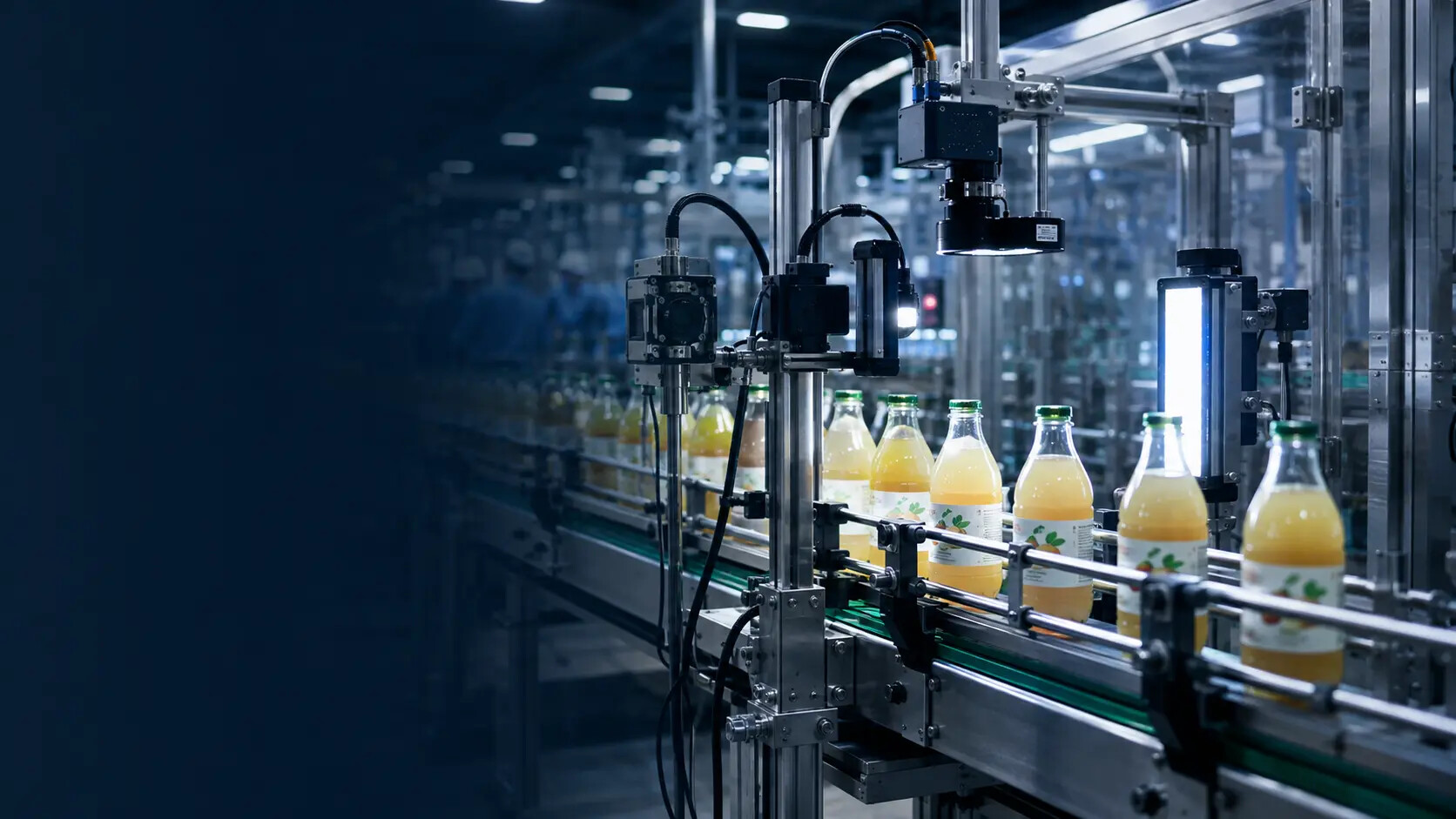
Label inspection systems that protect every pack
Detect missing, misplaced, skewed, incorrect and poorly printed labels in production—then reject failures before they reach your customer.
Find label faults before your customers do
We combine suitable cameras, optics, lighting, controls and product handling to inspect the label features that matter to your operation.
Missing-label detection
Confirm that every pack carries the required label before it leaves the line.
Explore capability → 02Label-position inspection
Measure label placement against defined horizontal and vertical tolerances.
Explore capability → 03Skewed-label detection
Identify rotated or leaning labels that fall outside agreed presentation limits.
Explore capability → 04Front-and-back verification
Check both label panels are present, correctly paired and in the expected position.
Explore capability → 05Wraparound inspection
Inspect label presence, alignment, overlap and visible defects around cylindrical packs.
Explore capability → 06Wrong-label detection
Compare label identity with the selected product recipe or production instruction.
Explore capability → 07Artwork verification
Confirm critical graphics, logos, symbols and layout features against an approved reference.
Explore capability → 08Colour inspection
Detect material colour shifts or incorrect colour variants where the application permits.
Explore capability → 09Print-quality inspection
Inspect variable print, legibility, smudging, missing characters and print presence.
Explore capability → 10Automatic reject systems
Remove failed packs and confirm the reject event without stopping normal production.
Explore capability →What is a label inspection system?
A label inspection system is an in-line machine-vision station that captures images of each pack, compares visible label features with defined rules or the active product recipe, and produces a pass/fail result. It can check label presence and position, distinguish the wrong label, inspect artwork and print, read codes and trigger an automatic reject—all without relying on manual sampling.
Label inspection matched to the pack and production risk
Dedicated application guidance helps you identify the right camera coverage, inspection tools, data and reject strategy before requesting a trial.
360° and multi-camera label inspection
Front, back, neck and wraparound inspection for round, oval and flat-sided containers.
Explore bottle inspection → Codes & dataBarcode, OCR and OCV verification
Read and compare dates, batch codes, serials, QR codes, GS1 barcodes and Data Matrix symbols.
Explore code verification → Food & drinkFood and beverage label checks
Reduce SKU, allergen-label, date-code and presentation risks on packaged food and drink.
Explore food applications → Life sciencesPharmaceutical label inspection
Controlled label identity, UDI, serial, lot and expiry checks with validation-support options.
Explore pharmaceutical inspection → Budget planningLabel inspection system cost factors
Understand how cameras, coverage, speed, handling, rejection and documentation affect project cost.
Plan your budget → SpecificationBuyer’s guide and sample-trial checklist
Turn faults, tolerances, products and line conditions into a testable inspection specification.
Read the buyer’s guide → Difficult surfacesTransparent and clear-label inspection
Plan lighting, optics and trials for clear film, glass, PET and low-contrast label edges.
Explore clear-label inspection → Applied-label qualityWrinkles, bubbles and label defects
Define observable folds, tears, bubbles, lifted edges, double labels and presentation faults.
Explore defect inspection → Existing production linesRetrofit label inspection
Assess line space, handling, PLC signals, reject distance and installation boundaries.
Plan a retrofit →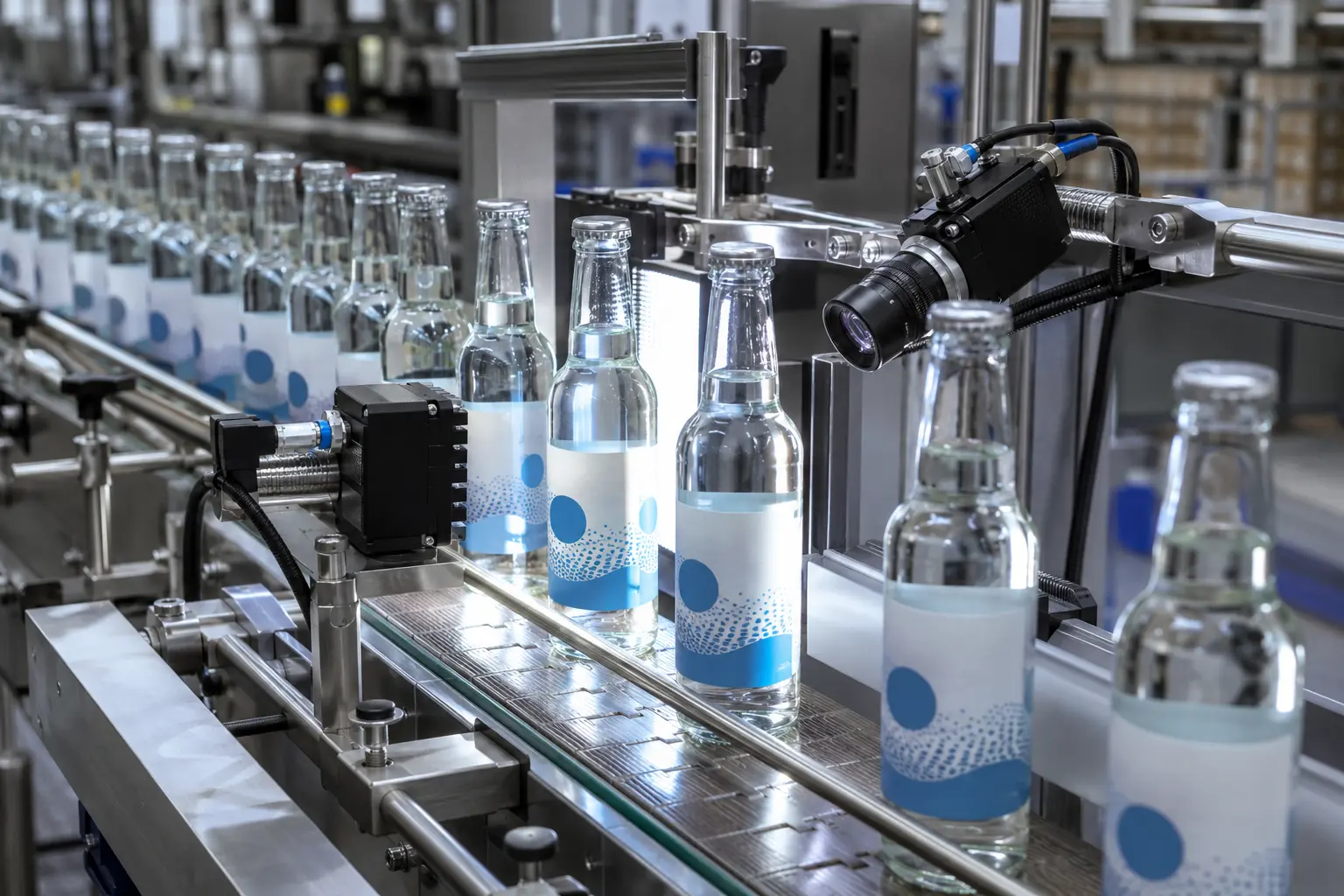
Inspection that works in production—not only in a laboratory
A reliable system must control lighting, present each pack consistently, inspect the right regions and handle every failed product. We engineer the complete inspection station around your product range and operating environment.
- Application-specific cameras, lenses and lighting
- Product recipes and controlled tolerance settings
- Conveyor tracking and trigger integration
- Pass/fail signals, alarms and line interlocks
- Optional result images and production data
From sample trial to supported production system
Clear acceptance criteria are agreed early, so everyone understands what the system will inspect and how performance will be demonstrated.
- 01
Define
Products, labels, faults, line speed, changeovers and acceptance limits.
- 02
Prove
Representative good and defective samples tested under controlled conditions.
- 03
Engineer
Vision, lighting, handling, controls, guarding and rejection designed as one station.
- 04
Support
Commissioning, operator training, challenge testing and ongoing technical support.
Designed for regulated and brand-critical packaging
Label inspection reduces the risk of presentation faults, product mix-ups, unreadable information and avoidable rework across demanding production sectors.
Explore industry applications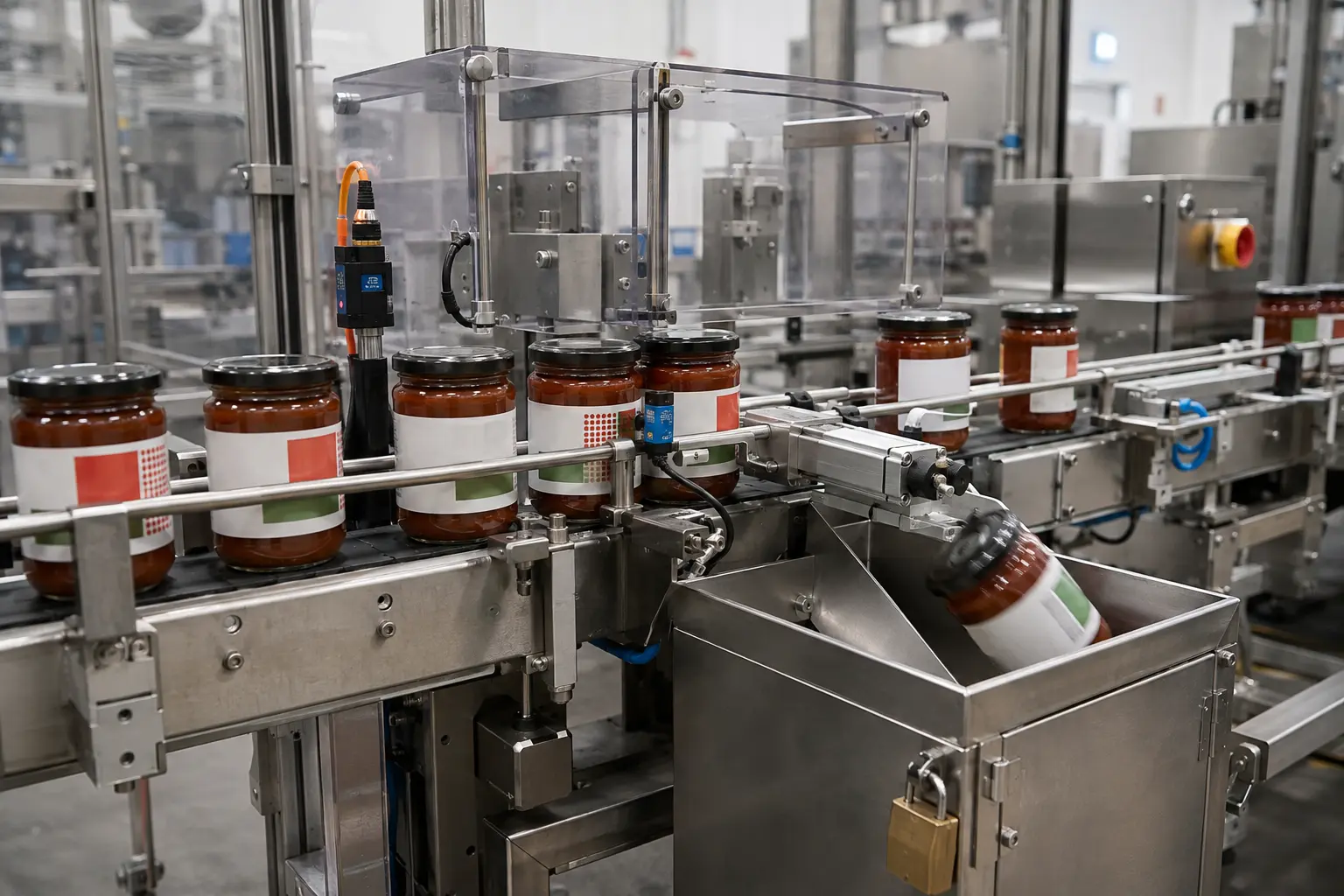
Detecting a fault is only half the job
A complete inspection system makes a controlled decision, tracks the pack and removes it at the right point. We can integrate pneumatic pushers, air blast, drop-flap or line-stop arrangements to suit the product and risk assessment.
- Positive reject confirmation
- Lockable reject collection options
- Bin-full and reject-fault alarms
- Fail-safe operating strategies
Send us a product, a label and the faults you need to find
We will review your requirement and recommend a practical route to testing, specification and integration.
Label inspection system FAQs
Can a label inspection system be added to an existing line?
Yes. Most projects are engineered around the available conveyor, line controls, product handling and reject space. A line assessment confirms camera positions, lighting, guarding, signals and mechanical changes before the design is finalised.
Can one system inspect different products and labels?
Yes. Product recipes can store inspection regions, reference images and tolerance settings for repeatable changeovers. The number of recipes and the change-control approach are agreed for the application.
What happens when a label fails inspection?
The system can stop the line, alarm an operator or trigger an automatic reject device. Where required, reject confirmation and bin-full monitoring can provide additional assurance that failed packs are contained.
Can the system check variable print and barcodes?
Print-presence, OCR, OCV and barcode or 2D-code verification can be included when image resolution, contrast and line conditions support the required check. We prove the inspection using representative samples before final specification.
Do you provide trials and validation support?
Oxford Vision Systems can assess samples, develop a proof of concept and define challenge tests. Documentation, training and validation support can then be matched to the needs of the production environment.
Turn each label fault into a separate inspection decision
A label can be present and neatly positioned while carrying the wrong artwork or code. Build the inspection specification as a list of decisions, each with its own approved reference, visible feature and response to failure.
Presence and placement
Define which label panels must be visible and the permitted position or rotation. Include transparent labels, curved packs and normal reflections in the sample set. Camera coverage needs to show the relevant edges; a good view of the front panel cannot establish the condition of a hidden rear label.
Artwork and variant
Identify the features that distinguish similar labels, including language, size or product variants. Agree how the active reference is selected and checked against the production order. A system inspecting the wrong approved artwork can make a consistent decision about the wrong product.
Variable print and code content
State whether the task is to detect print, read characters or compare decoded content with an expected value. Include the smallest required text and the full range of valid messages. Code readability and the correctness of the encoded information are separate checks.
Reject tracking and inspection unavailable
Follow the result through to the affected pack. Challenge stopped conveyors, changed product spacing and adjacent failed packs. Define what happens when a result is missing, a reject is not confirmed or the reject collection area cannot accept another pack.
For the trial, prepare identified good, bad and borderline samples for each decision and each critical recipe. Record accepted variation as well as defects; suppressing legitimate packs and allowing defective packs are different failures to assess.
Use the inspection buyer’s guide, barcode and text verification and reject-system guidance to turn this decision list into one complete station brief.
Read the food-label identity and changeover guide for near-match SKU, panel-pairing and restart challenges.
How should a label-inspection system handle an artwork change?
Define the features the inspection must check and how the approved reference changes between products. Include label presence, position and printed content as separate requirements where relevant. Agree version control and restart checks so a correct inspection setup is associated with the current product and label roll.
- Inspection features and reference
- Artwork-version control
- Product change and restart checks
Related guidance: Wrinkles, bubbles & defects · Validation & records